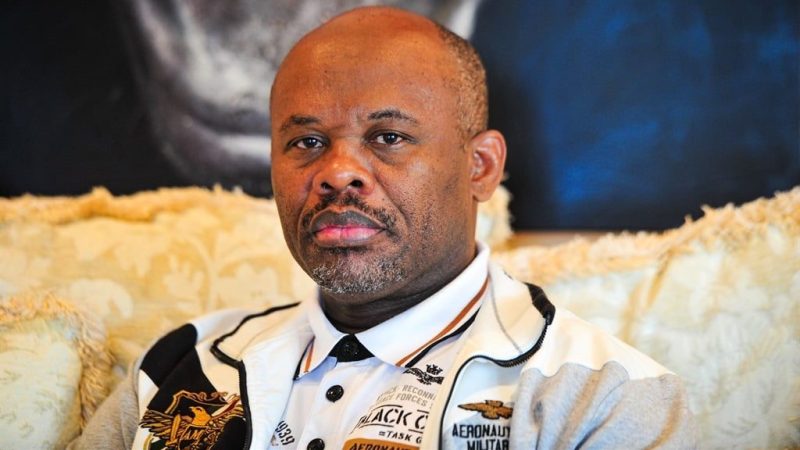
Andrew Bailey Biography: Missouri AG to FBI in 3 Moves
In August 2025, Andrew Bailey told Missourians he was answering a call to service at the national level. On September 28, 2026, he told the country he was stepping down to “return to my family in Missouri.” Between those two statements sits one of the strangest chapters in recent Missouri politics. A state attorney general who had just won a full term walked away from it, became one of the FBI’s two deputy directors, and left again a little more than a year later.
This Andrew Bailey biography traces that arc through three decisions: the move against a St. Louis prosecutor, the choice to turn the attorney general’s office into a national litigation firm, and the resignation that sent him to Washington. Before those, it helps to see what the job he kept reinventing actually looks like from the inside.
A Typical Week as Missouri’s Attorney General
No two weeks in the Missouri Attorney General’s Office were identical, so treat this as a composite built from the office’s public duties and Bailey’s public record, not a diary of his calendar.
Monday starts in Jefferson City with briefings. The attorney general is the state’s lawyer, which means a running docket of criminal appeals, defenses of state laws, consumer protection matters, and opinions requested by state agencies. Senior staff, including a solicitor general who handles the biggest appellate and Supreme Court questions and a deputy who manages internal operations, decide what needs the boss’s attention first. Bailey named Josh Divine, a former deputy counsel to Senator Josh Hawley, as solicitor general in December 2022, and leaned on Bill Corrigan as his deputy.
Tuesday and Wednesday are for courtrooms and coalitions. Republican attorneys general routinely join multistate lawsuits and briefs, so calls with counterparts in other states sit alongside filings in federal court and arguments before the Missouri Supreme Court. Occasionally the office steps in as a special prosecutor when a local matter needs an outside lawyer.
Thursday belongs to the public side of the job. Press conferences announce investigations, lawsuits, and settlements, in Jefferson City or in St. Louis. Friday is for legislators, county prosecutors, sheriffs, and the constant question of staffing an office that has to answer for thousands of cases.
Underneath that rhythm is a political fact every recent Missouri attorney general has lived with: the office is a launchpad. Josh Hawley won it in 2016 and was in the U.S. Senate by 2019. Eric Schmitt held it until he joined the Senate in 2023. Bailey inherited that trajectory, and how he used the office tells you most of what you need to know about him.
Who Is Andrew Bailey? The Background Before the Office
Andrew Bailey was born in 1981 and is a Republican. He earned a bachelor’s degree in English from the University of Missouri on an Army ROTC scholarship, then served as an Army officer with two deployments to Iraq. He returned to the University of Missouri for his law degree, which he received in 2013.
His legal career climbed through the state’s own institutions. He worked as an assistant attorney general, then as an assistant prosecuting attorney and juvenile officer in Warren County, and later as general counsel of the Missouri Department of Corrections. In 2019 he joined Governor Mike Parson’s office as deputy general counsel, and in 2021 he became the governor’s general counsel. When Parson named him attorney general, he credited Bailey’s work clearing more than 2,000 clemency applications and handling more than 100 judicial appointments.
Parson made the appointment on November 23, 2022, after Eric Schmitt won his U.S. Senate race. Bailey was sworn in on January 3, 2023, as the 44th Attorney General of Missouri. He is married to Jessica Bailey.
One anecdote from his teenage years captures the temperament. A future Democratic state senator who crossed paths with him on the high school debate circuit remembers Bailey choosing the negative side of the argument “because I like to break things.” Adversarial by instinct, he arrived at a job that rewards exactly that.
Decision One: Going After the Local Prosecutor in St. Louis
The first decision came within weeks of taking office. On February 23, 2023, at 12:01 p.m., Bailey’s office filed a quo warranto petition to remove St. Louis Circuit Attorney Kim Gardner from office. Quo warranto is an old legal tool that had been used fewer than ten times in Missouri history, which gives a sense of how unusual the move was.
The petition accused Gardner of neglecting the duties of her office. It said her office failed to prosecute cases, failed to keep crime victims informed, and failed to fill vacancies, leaving her staff with what the filing called an unmanageable workload. The filing came weeks after a serious crash involving a driver who was out on bond in a pending case, an episode that became a symbol of the criticism. Gardner called the suit a political stunt, noting that Bailey was heading toward his own 2024 election.
The confrontation ended abruptly. Gardner had announced she would resign on June 1, but Bailey said he would keep pursuing the case until she actually left. On May 16, 2023, she resigned immediately, about two hours before a hearing at which a judge might have ordered records disclosed. His office then filed a voluntary dismissal without prejudice. In November 2023, Bailey released a 62 page report on the investigation, and he recommended that the legislature strengthen the quo warranto process and consider barring officials who resign under such proceedings from running again for the same office.
Supporters saw a state officer enforcing accountability where local systems had failed. Critics, including Gardner herself, saw a statewide official using a rarely used power against a locally elected prosecutor in a political year. Either way, the episode set the template: Bailey would use every lever the office held, and he would use it early and publicly. It also made his name across the state at the start of an election cycle.
Decision Two: Turning the Office Into a National Litigation Machine
The second decision was not a single event but a strategy. Over two and a half years, Bailey aimed the attorney general’s office at national fights, joining or leading suits over immigration, student loan forgiveness, environmental rules, gun policy, and transgender rights during the Biden administration.
He inherited the marquee case from Schmitt. The lawsuit over alleged government pressure on social media companies, first filed as Missouri v. Biden, reached the U.S. Supreme Court as Murthy v. Missouri. On June 26, 2024, the justices ruled 6 to 3 that the plaintiffs lacked standing, so the case ended without a ruling on its merits.
Other fights broke his way. Also inherited from Schmitt was Missouri’s lawsuit against China over pandemic era hoarding of protective equipment. On March 7, 2025, a federal judge in the Eastern District of Missouri entered a default judgment of about $24.5 billion after Chinese defendants did not appear. Bailey promised to collect by seizing Chinese owned assets, including Missouri farmland. Collection has proved difficult. China does not recognize the ruling, China sued Missouri in a Wuhan court in December 2025, and Hubei Province and the Chinese Academy of Sciences asked the Missouri court on August 31, 2026, to vacate the judgment.
He also pushed into corporate and political territory. NPR reported that he sued Starbucks and IBM over their diversity initiatives, and that he sued New York after a jury convicted Donald Trump on business records charges, alleging election interference against Missouri.
Abortion became the sharpest domestic front. After voters approved a state constitutional right to abortion in November 2024, Bailey’s office argued for keeping some restrictions in place and sought to require enforcement of others. Bailey had also argued for a fiscal note about lost tax revenue if abortion were legalized, and the Missouri Supreme Court rejected including it. Planned Parenthood’s regional leadership called his approach an effort to sow confusion and override voters, while allies described it as defending state law.
The most contested episode involved Marcellus Williams. Williams was convicted of the 1998 stabbing death of Felicia Gayle, but DNA testing raised questions about the evidence. St. Louis County Prosecuting Attorney Wesley Bell and Williams agreed to a deal that would have replaced his death sentence with life without parole, and a judge and the victim’s family signed off. Bailey’s office asked the Missouri Supreme Court to block it, and on August 22, 2024, the court did, ordering an evidentiary hearing instead. A circuit judge later ruled that Williams had not proved his innocence, the courts declined to intervene, and Missouri executed Williams on September 24, 2024. Bailey said the state had upheld the rule of law and argued the DNA results did not prove innocence. Williams’s lawyers, the prosecutor, and the Innocence Project said an innocent man was executed. Three U.S. Supreme Court justices, Sonia Sotomayor, Elena Kagan, and Ketanji Brown Jackson, would have granted a stay.
Voters, at least, gave the overall approach a verdict. In November 2024, Bailey won a full four year term with roughly 60 percent of the vote. That result is what made the next decision so surprising.
Decision Three: Leaving Jefferson City for the FBI
On August 18, 2025, Bailey announced he was resigning as attorney general to become co deputy director of the FBI, working under Director Kash Patel with then U.S. Attorney General Pam Bondi. He left the state office in early September and took the federal post that month. The day after his announcement, Governor Mike Kehoe appointed former U.S. Attorney and Missouri House Speaker Catherine Hanaway as his successor, which gave Missouri its fourth attorney general in a little more than eight years.
Observers saw the logic and the risk. Bailey had been floated for national roles before and was reportedly a contender for U.S. attorney general before Trump chose Bondi. A law professor quoted by NPR predicted he could use federal law enforcement powers to pursue the same issues he had worked on in Missouri. The risk was leaving a statewide office, and a possible path to the governor’s mansion or the Senate, for a job with limited public visibility.
Inside the bureau, Bailey generally kept a low profile, according to St. Louis Public Radio. He was present when agents searched the main election office in Fulton County, Georgia, in connection with records from the 2020 election. On May 26, 2026, he appeared in St. Louis with Senator Eric Schmitt to promote Operation VIPER, a crime reduction effort that surged FBI agents into the region.
Then came the turn. On Monday, September 28, 2026, Bailey announced on X that he was leaving, and the FBI said his last day would be Friday. He thanked President Trump, U.S. Attorney General Todd Blanche, and Director Patel. Reporting described him as often seen as a potential successor to Patel, and the Wall Street Journal reported that hundreds of agents had left the bureau in recent months. Bailey himself gave one reason: family.
What Andrew Bailey’s Career Reveals About the Missouri Attorney General Pipeline
Compare Bailey with Hawley and Schmitt and the pattern is clear. Each used a short tenure to build a national profile, and each moved up through elected office. Bailey’s route differed. He tried the federal route without an election and came home without a new title.
The consistent thread is method. As attorney general, he favored aggressive, high visibility action: removing a prosecutor, suing national corporations, taking on the federal government, and contesting court decisions and ballot outcomes. Supporters call that accountability and rule of law. Critics say it blurred the line between legal advocacy and political campaigning. Both readings appear throughout the public record, and a fair Andrew Bailey biography has to hold both.
Where Andrew Bailey Stands Today
As of September 29, 2026, Bailey is a former Missouri attorney general and a departing FBI co deputy director, one week from his final day at the bureau. He has not said what comes next. St. Louis Public Radio notes that Missouri’s Republican statewide officeholders all plan to seek second terms in 2028, so any return to elected office would mean challenging an incumbent or waiting for an opening.
For now, the Andrew Bailey biography ends where it began: with a decision, a statement about service, and an open question about what he does next.